A webshop is not a DTC strategy
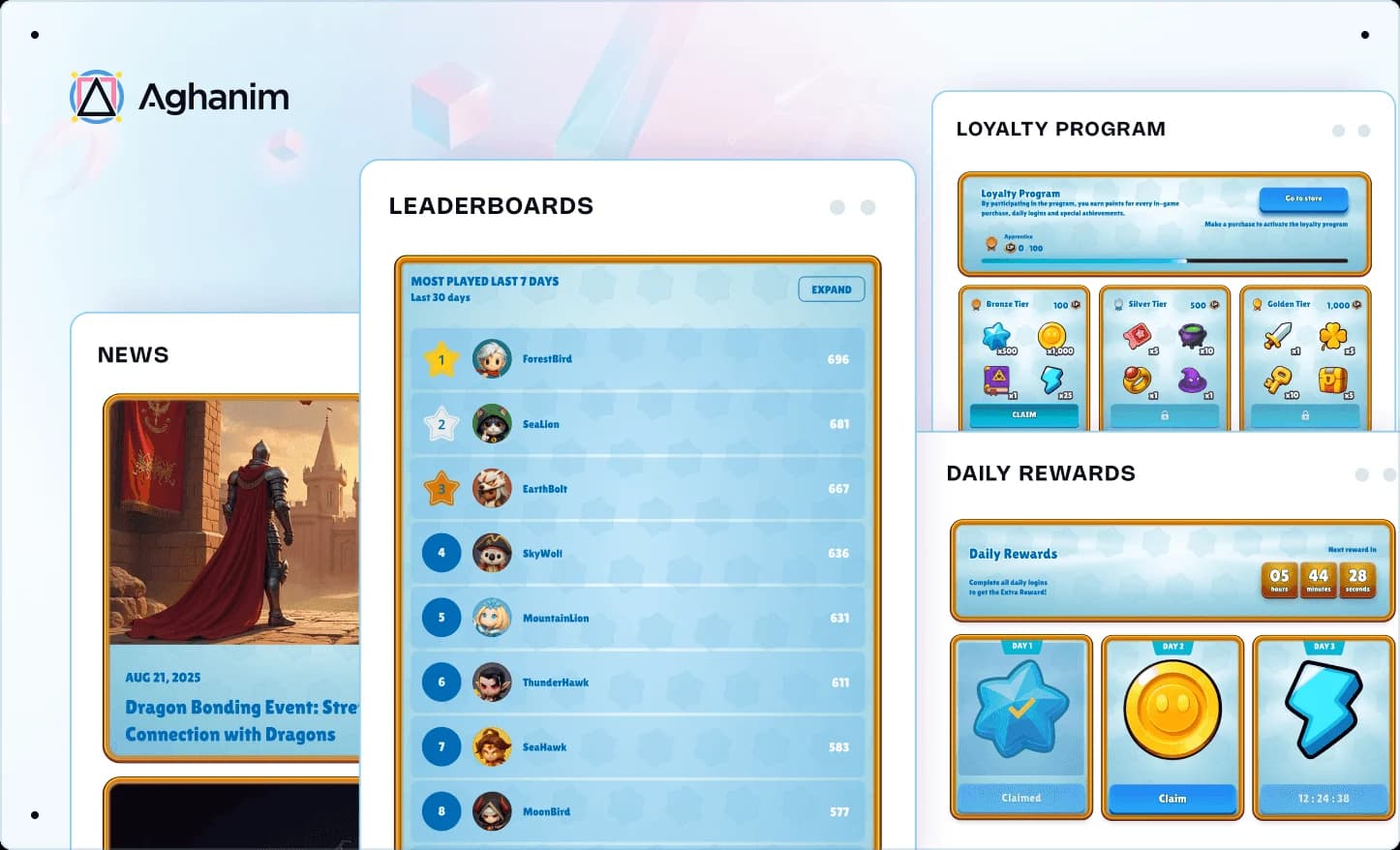
Here is a test for any direct-to-consumer plan. Picture your webshop with the payments switched off. No checkout, no buy buttons, nothing to purchase. Now ask one question: would your players still come back? If the answer is yes, you have built a channel: a place they open for news, events, rewards, leaderboards, and community, the things that bring players back on their own. If the answer is no, you have built a checkout page. The moment a platform policy shifts, a page players visited only to pay gives them no reason to return, and the direct relationship never had a chance to form.
That question separates studios who treat a webshop as the whole strategy, from the ones who treat it as one part of a larger DTC plan.
Recovering margin, owning the transaction, and selling on your own terms is real revenue, and it belongs in any serious DTC plan. While commerce is necessary, it’s not sufficient. A webshop answers one question: where does the transaction happen? That is useful, and it is the MVP of DTC.
The rest is a game hub. A game hub answers the questions a checkout page cannot:
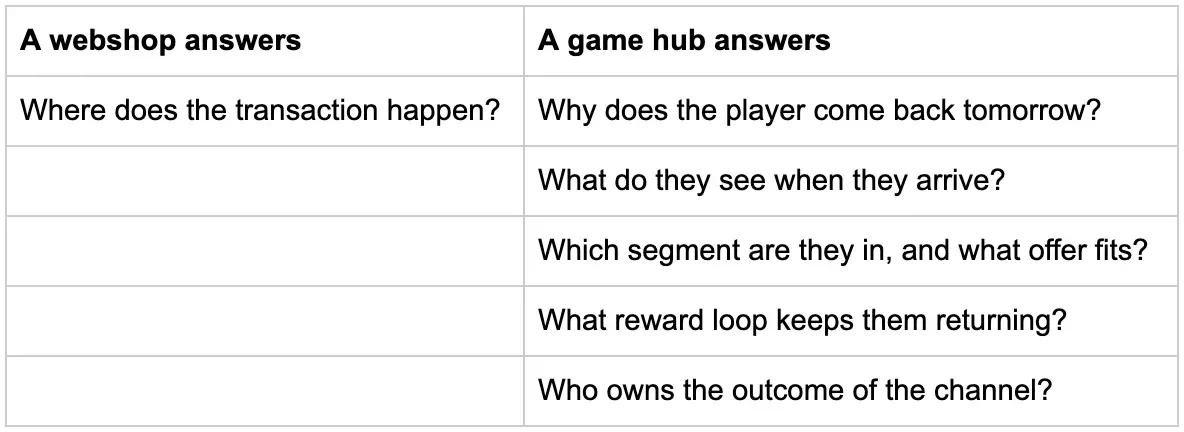
It’s the same commerce underneath but a very different business around it.
Players do not wake up wanting to visit a store
You launch a store, point a link at it, and wait for purchases to happen. Players have no reason to return. A content and community first strategy gives players a reason to show up repeatedly:
- daily rewards, reward points, cashback, and loyalty tiers
- achievements, leaderboards, and quizzes
- news, events, and seasonal content
- redeemable codes, promo campaigns, and gifts
- mini games, fan voting, player profiles, and a game wiki
- creator campaigns and influencer drops
Conversion rates for game hubs are much higher because of this. Once players are in the habit of visiting, you run sophisticated, segmented offers on top of that habit. Traffic comes from the content, revenue comes from targeting and the commerce layer underneath. In that order.
This also reframes what the work actually is. A store is something you set up. A game hub is something you operate. Studios who win run their hub like a live product, testing offers, rewards, bundles, and content on a weekly cadence, often several experiments a week, and let the data decide what stays.
Skullgirls drove more than a million players to its game hub in a few months, built on community initiatives and promo codes, not discounts alone.
Critical Strike saw 40 percent of its players visit the game hub in week one, a sign of fast channel adoption.
Scopely runs WWE Champions the same way: a game hub that would still be worth visiting even if you removed the storefront. It is the one players choose to return to.
You can win the web and still lose it at checkout
Say you do all of this right. Strong game hub, real content, returning players, conversion tuned to the decimal. There is one more way to give it back, and most teams never see it coming. It is the payment layer underneath.
Commerce done right is one of the best converting parts of a hub. Commerce done generically is where the value leaks. Generic fintech, including the horizontal fintech stacks that claim to serve games, treats a game purchase like any other online transaction. But a mobile game is not generic ecommerce. It has its own logic: bundles, hard and soft currency, whale dynamics, SKU structures, live event timing, and payer behavior that changes market by market.
A checkout built for everything is tuned for nothing. It adds steps, asks for the wrong things, loads slowly, and feels foreign to a player who was inside your game a second ago. Dropoff climbs, and the conversions you earned upstream leak out at the last screen.
It gets worse when the rails chase breadth. A long tail of low value payment methods looks like coverage on a slide. In practice it cannibalizes margin and complicates reconciliation without adding real conversion. The goal is not more methods. The goal is the rails that actually convert in each market, routed well, with clean settlement behind them.
So the checkout has to be game native, not store native. One click login, organic UI, mobile first, fast, and routed to what converts where the player lives. It should recognize the player, carry their identity across from the game, and surface the offer that fits them.
Payments should feel like a continuation of the game, handled by a merchant of record that absorbs tax, fraud, chargebacks, security and compliance so your team never has to. Getting the web right only pays off when the rails are right too.
The same caution applies to liveops. Running liveops on your web channel through an outside platform is fine. Running your in-game liveops that way is riskier, so the best studios keep that part under their own control.
The game hub is the strategy. The webshop is one tab.
A store matters. It should not be the whole experience. Studios setting the pace treat DTC as a live operated product: a branded game hub where content, community, loyalty, continuous experimentation, and commerce live together, with payments built for games underneath. The webshop is one tab inside that hub. A real strategy is everything around it, commerce included.