When Deployment Architecture Defines Your Launch Economics
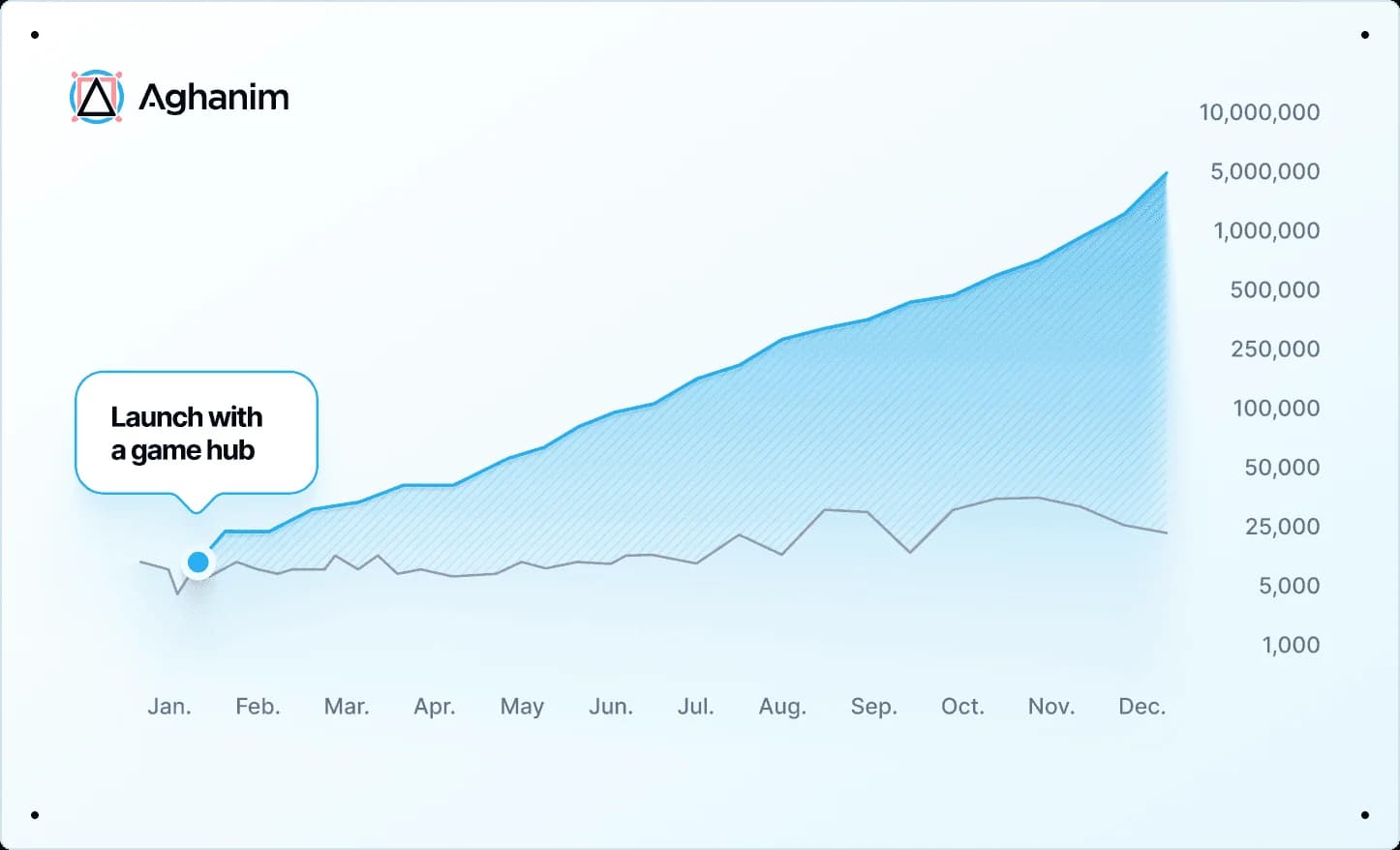
Launch week is not just a marketing window. It is also an infrastructure window. For most of mobile gaming’s DTC history, the game hub arrived months after launch, long after the purchases had already gone to the app stores. Every week without an active DTC channel lets platform economics win by default. Not by strategy, but by missing infrastructure.
In one recent midcore mobile launch, a day one DTC channel captured nearly a quarter of first week transaction volume. If DTC is not ready at launch, the studio is not missing an average user. It is missing its highest value audience.
Why the Timeline Was About Architecture, Not Effort
Historically, DTC deployment took months. The commercial, compliance, payment, and risk layers each came from a different vendor, and stitching them together by hand was where the months went.
If architecture creates the delay, more engineers do not fix it. Productized infrastructure does away with the stitching. Merchant of Record, global tax handling, fraud protection, and payment localization are built into one platform instead of assembled piece by piece. Launch speed becomes a function of infrastructure choice, not spare engineering capacity.
What Changes When DTC Is Ready on Day One
When DTC is live on day one, the economics are different from every later period. In one recent launch, direct channel transactions reached 24% of total volume within the first week.
The first days after release often bring the most motivated, purchase ready players into the game at the same time. This is especially true when demand was built through pre-registration, or when players arrive from previous titles in the same franchise. That audience behaves differently from standard UA cohorts that arrive later.
If DTC is not ready in that window, it also misses the earliest first party signals. Segment composition, price sensitivity, conversion behavior, and early payer patterns start forming with the first direct channel interaction. Data captured weeks later is not the same data.
The same is true for habits. A game hub available on day one can become part of how players learn to buy, claim rewards, and return. A game hub introduced months later has to compete with habits already formed elsewhere.
Then there is margin. Every transaction before DTC is live runs through platform economics. In a high volume launch, that gap is not a rounding error. It is the cost of being late.
The pattern extends beyond one launch. In SuperPlanet's portfolio rollout, Aghanim supported 10 game hubs in under 30 days. K-Devil Hunter reached 48% web revenue share in less than 30 days. What repeats is infrastructure readiness. The game hub is live early, compliant, and already part of the player journey.
Infrastructure Is a Distribution Decision
An infrastructure first approach treats DTC as more than a feature set. The game hub becomes part of the game’s distribution layer from the start. Studios that think this way bring deployment timing and data architecture into the launch plan instead of leaving them for the post-launch roadmap.
At moderate transaction volume, the difference can look small. As volume grows, it becomes material. That matters most when studios enter new markets, introduce segmentation, or keep iterating on offer structures.
Key Takeaway
Deployment time is an economic lever, not a convenience. When the infrastructure is built in, studios can activate DTC in days instead of months, which changes the economics from day one.
The practical step is to model DTC readiness before the launch plan is locked. That decision determines whether the studio can build direct relationships with players and a game hub economy from the start.