A Game Hub Has to Earn the Next Interaction
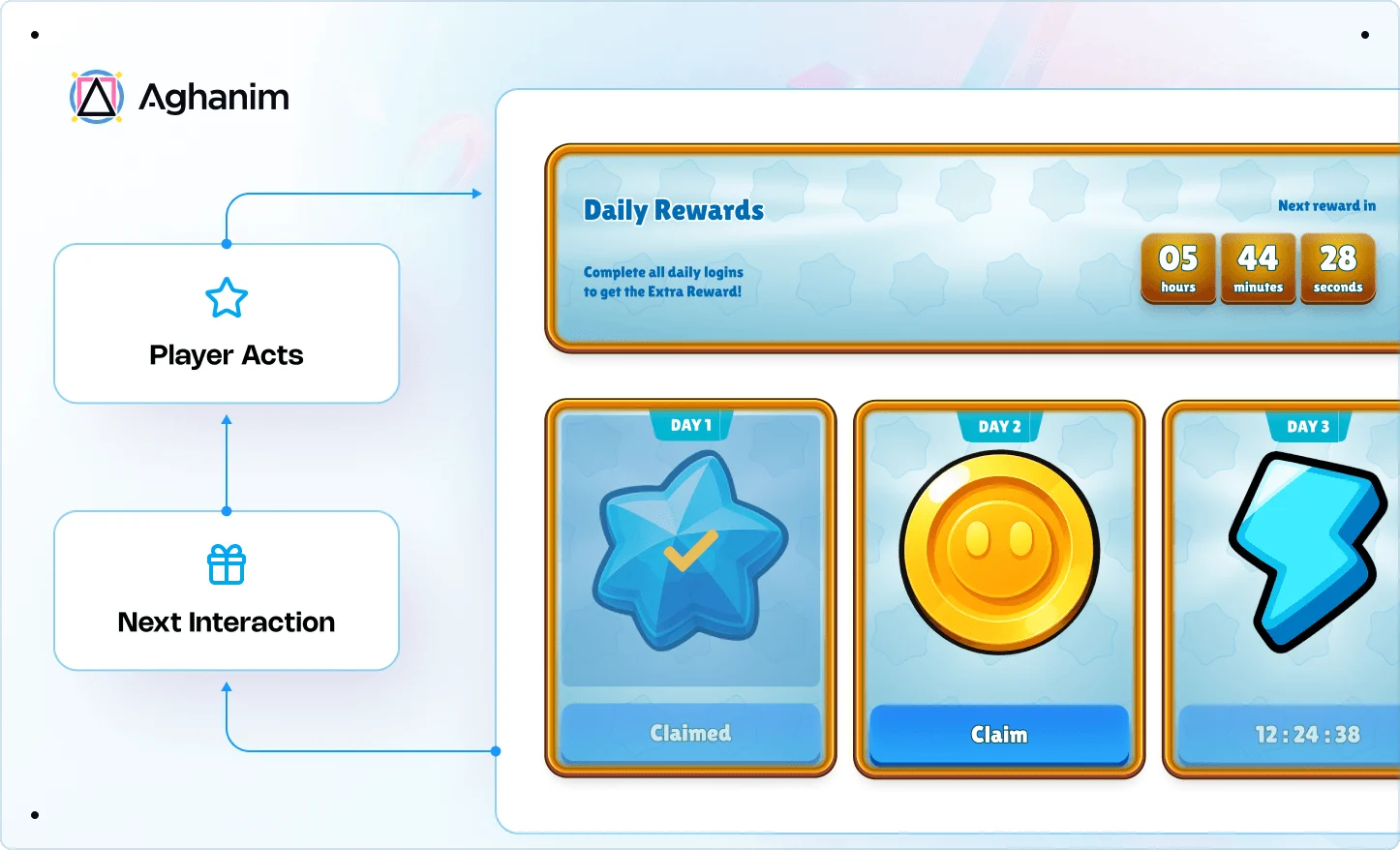
The strategic advantage of a game hub is not that it gives the studio another place to publish or another storefront to send players to. It is a continuity layer where the game can explain, listen, recognize, and respond. A game hub earns a place in the player’s routine when it preserves context between the game, the player, and the community, so each visit makes the next interaction clearer.
The missing layer is shared context
A live game communicates through many surfaces. The client, social channels, Discord, support, creator content, email, and push notifications. Each surface can be useful, yet the player often has to reconstruct the story on their own. An event begins in the game, details appear in a social post, a reward code arrives elsewhere, and support cannot see what happened before the ticket was opened.
The strategic role of a game hub is to preserve enough shared context that the relationship feels continuous. It does not need to absorb every conversation. It needs to make the current state of the player relationship clear. What is happening, why it matters to this player, and what the game recognizes after the player acts.
Game hub answers three questions
- What matters now? The player should quickly understand which event, opportunity, community objective, or change is relevant to them.
- What can I do next? The action should be clear. Join the event, claim a reward, vote, submit feedback, return to the game, or complete a transaction.
- Did the game recognize what I just did? Claiming a reward, completing a challenge, submitting a response, or completing a transaction should change what the player sees next. Recognition is what turns a sequence of pages into a relationship.
These three questions create a stricter design standard than content volume does. A destination can publish frequently and still feel fragmented. The real test is whether the player understands the current state and whether the system carries the result of one interaction into the next.
Communication must move in both directions
Communication from the game studio is often designed for distribution. Announce an update, promote an event, or explain an offer. A game hub becomes more valuable when the return path is designed with equal care. A player can opt in, select a preference, complete an action, submit feedback, or indicate that an experience was not useful.
Those responses should not disappear into a generic analytics stream. When the integration supports it, they should shape the next message, the next in-game state, or the next service interaction. The game explains; the player responds; the game recognizes; the next interaction reflects it. That is the communication loop.
Community is shared context, not another feed
Community does not require that every discussion move to a studio-owned website. Discord, social platforms, and creator communities remain appropriate places for conversation and discovery. A game hub serves a different role. It provides an authenticated point of continuity for those conversations.
A community milestone, event result, notable contribution, or collective reward becomes more useful when the player can see how it connects to their game identity. The value is not in owning every message; it is in recognizing participation and carrying its meaning back into the game.
Design the recognition loop
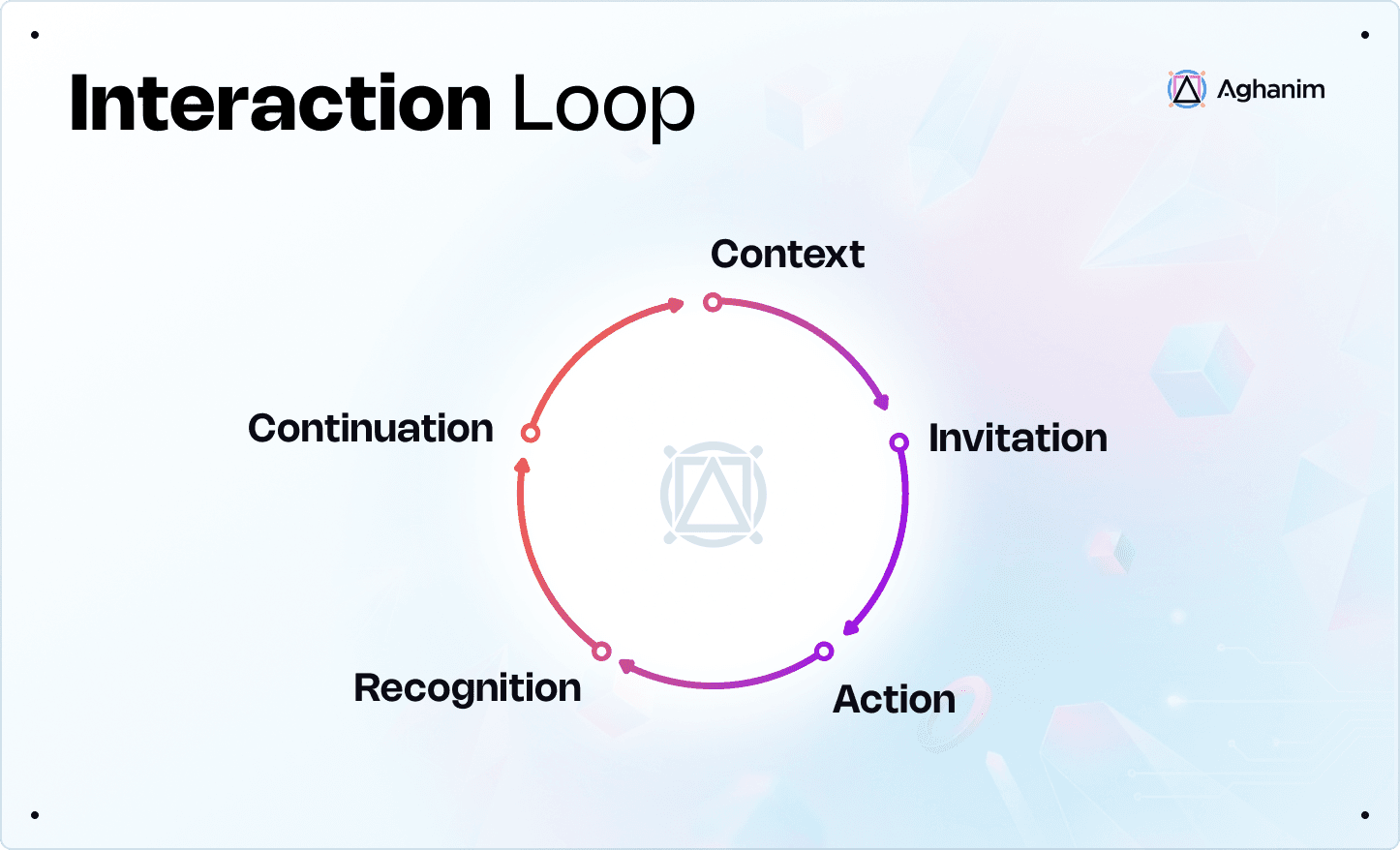
A strong interaction loop has five parts: context, invitation, action, recognition, and continuation. Context explains why this moment matters. The invitation clarifies the next action. The player acts. The system confirms what happened. The next surface reflects the outcome.
Consider a seasonal event entering its final stage. A game hub explains the shared objective and shows the player’s current contribution. The player chooses one of two community priorities, returns to the game to complete an objective, and then sees the collective result acknowledged in the game hub. A relevant commerce opportunity may appear, but the loop remains useful even without a transaction.
This works because each interaction changes the next one. The destination does more than distribute information; it preserves state across the relationship.
Use active game hubs as references, not templates
Active game hubs use different combinations of content and utility. 1945 Air Force, published by Falcon Games, organizes its store around Events Packages, Special Offers and Currency, and pairs it with Daily Check-in, a Wiki, News, and Events, so the offer a player sees always sits next to the context that makes it relevant. The lesson is not the module list itself, but that each module answers a question the player already has.
What matters is editorial clarity. Each destination gives players more than one way to understand or continue their relationship with the game. The studio should begin with the context its players most often lose, not with the longest possible feature list.
Measure whether context is being preserved
A game hub scorecard should show whether communication creates continuity, not merely traffic. Useful measures may include the share of visits that lead to a meaningful action, return-to-game behavior after a game hub interaction, repeat participation within the same journey, recognition rate of completed actions, unresolved states, and the time from player signal to relevant response.
Commerce remains part of the scorecard, but it should be connected to the journey that produced it. The studio should distinguish a transaction that follows a recognized act of participation from one driven by isolated purchase intent.
The goal is not to claim that every interaction creates revenue, but to identify which loops create durable player value.
Commerce belongs inside the loop
Commerce can help fund the loop and make the relationship economically sustainable. It can fund content, service, and the next round of product improvements. But placement matters. An offer should preserve the same identity, context,t and promise established in the previous interaction. Checkout is not the subject of this article; continuity is. A commercial moment works when it feels like a relevant next step in the player’s journey, not a detour into an unrelated transaction flow.
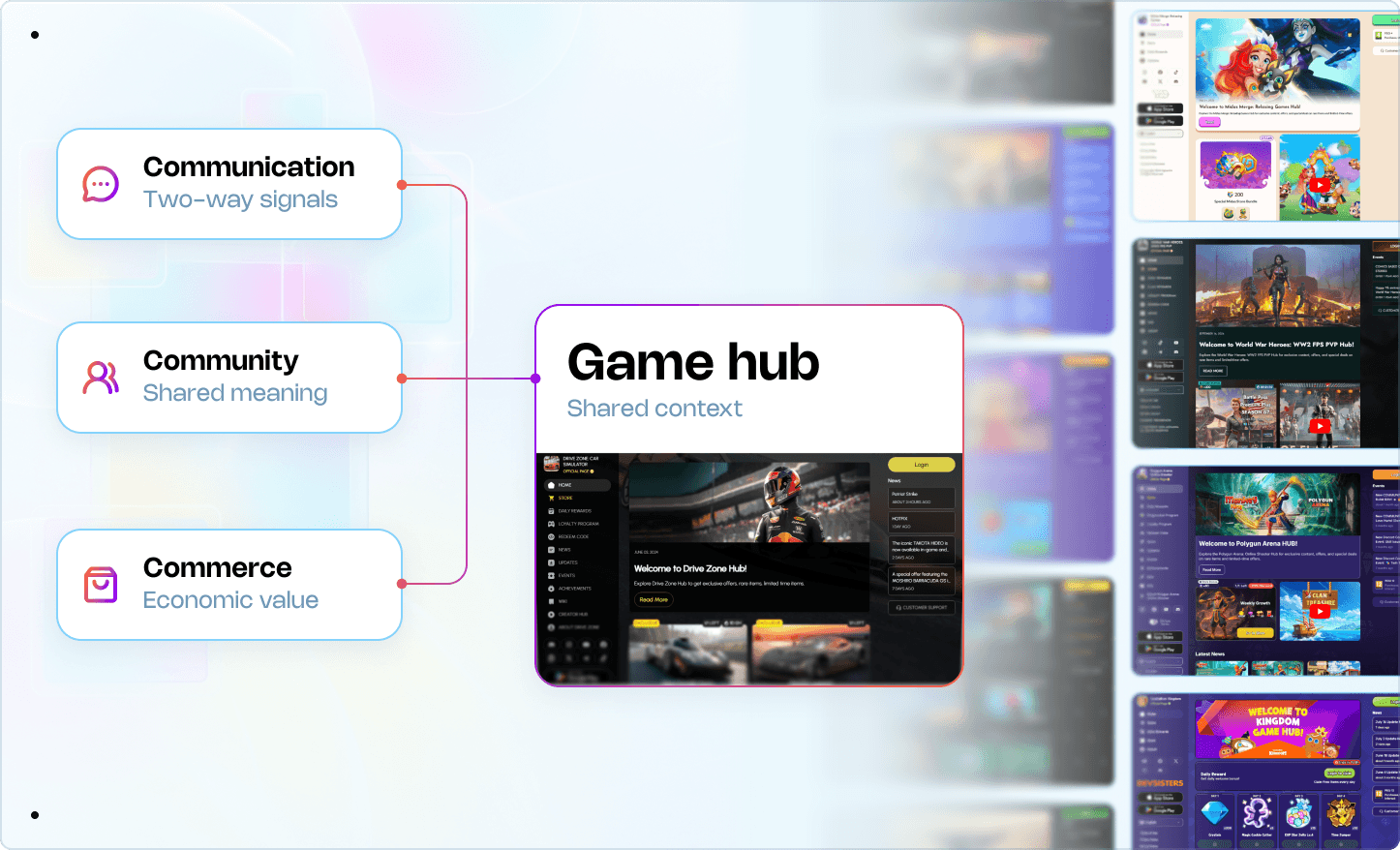
A game hub becomes another channel when it merely copies messages from elsewhere and creates another independent content calendar. It becomes an operating layer when it reduces fragmentation: an authenticated place to explain important state, receive responses, recognize outcomes, and return the player to the right next surface. The smallest useful game hub is therefore not the one with the fewest pages. It is the one that reliably closes one complete communication loop. The studio can begin with one event, one cohort, and one recognized action, then expand only when the loop creates real value.
Earn the next interaction
A place in the player’s routine is not created by publishing more often. It is created when the destination reduces ambiguity and preserves enough context to improve the next interaction. Community creates shared meaning. Communication carries that meaning in both directions. Commerce supports the system economically.
The strategic asset is continuity that the studio can operate and improve. A webshop captures demand that already exists: it only works when a player has decided to buy. A game hub creates demand by shaping the player journey. Events, content, rewards and community give players reasons to come back before they want anything, and that is where the next purchase starts.
A game hub earns the next interaction when each experience preserves context, reflects what happened before, and makes the next step clearer.