Game Hub vs. Webshop: What Each Model Does
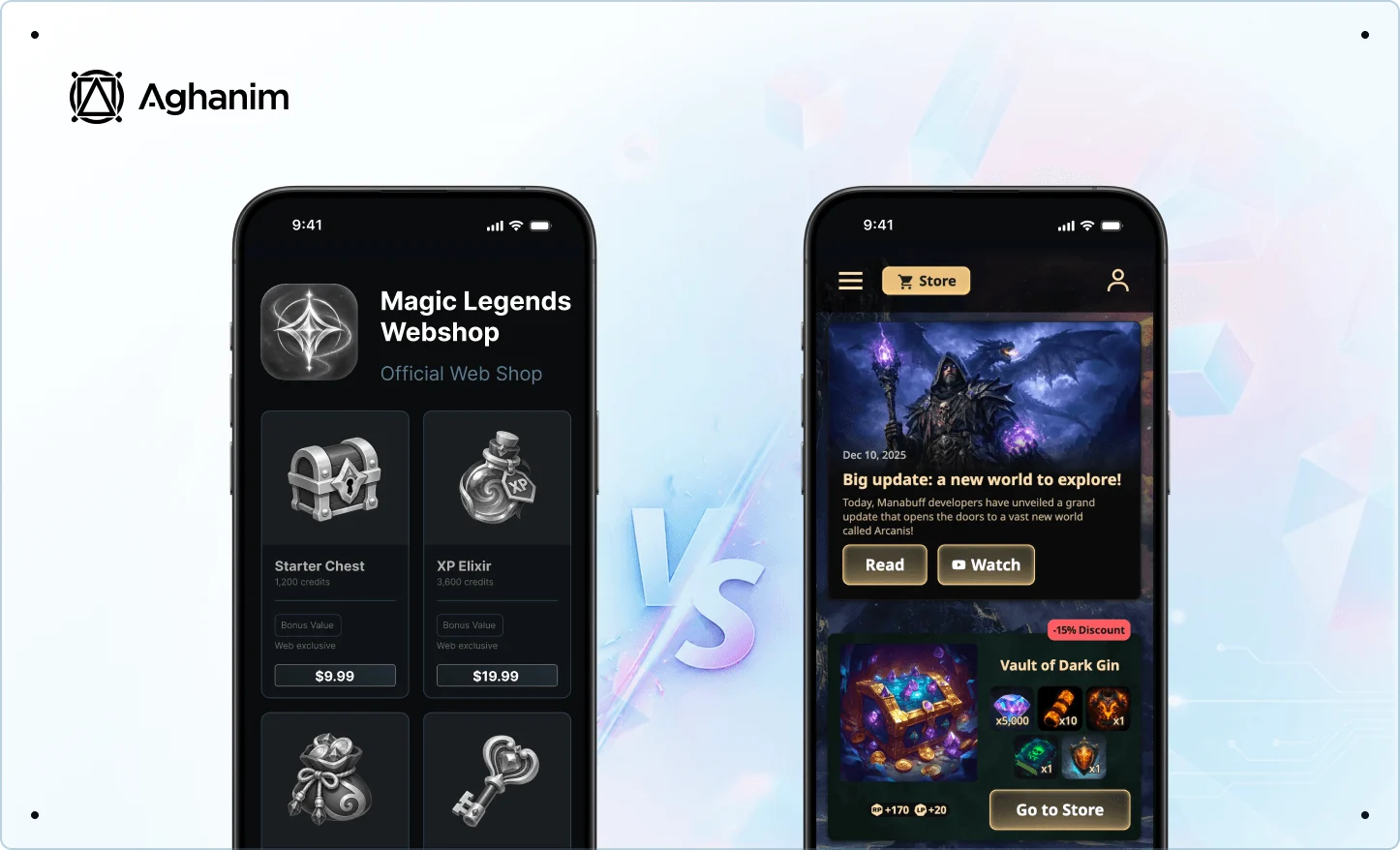
Studios evaluating DTC often encounter webshop and game hub in the same search, shortlist, or internal discussion. Both models can present products, offers, and a route to purchase on the web. Their operating scope is different.
A webshop organizes the web channel around the transaction. Players can see what is available and complete a purchase. A game hub brings commerce into a broader player destination: one branded place for commerce, content, events, rewards, profiles, leaderboards, achievements, and activity.
The choice therefore covers more than the payment route. It determines what the studio will operate on its owned web channel, how often players will have a reason to visit, and how far the channel extends into the player relationship.
A webshop centers the transaction
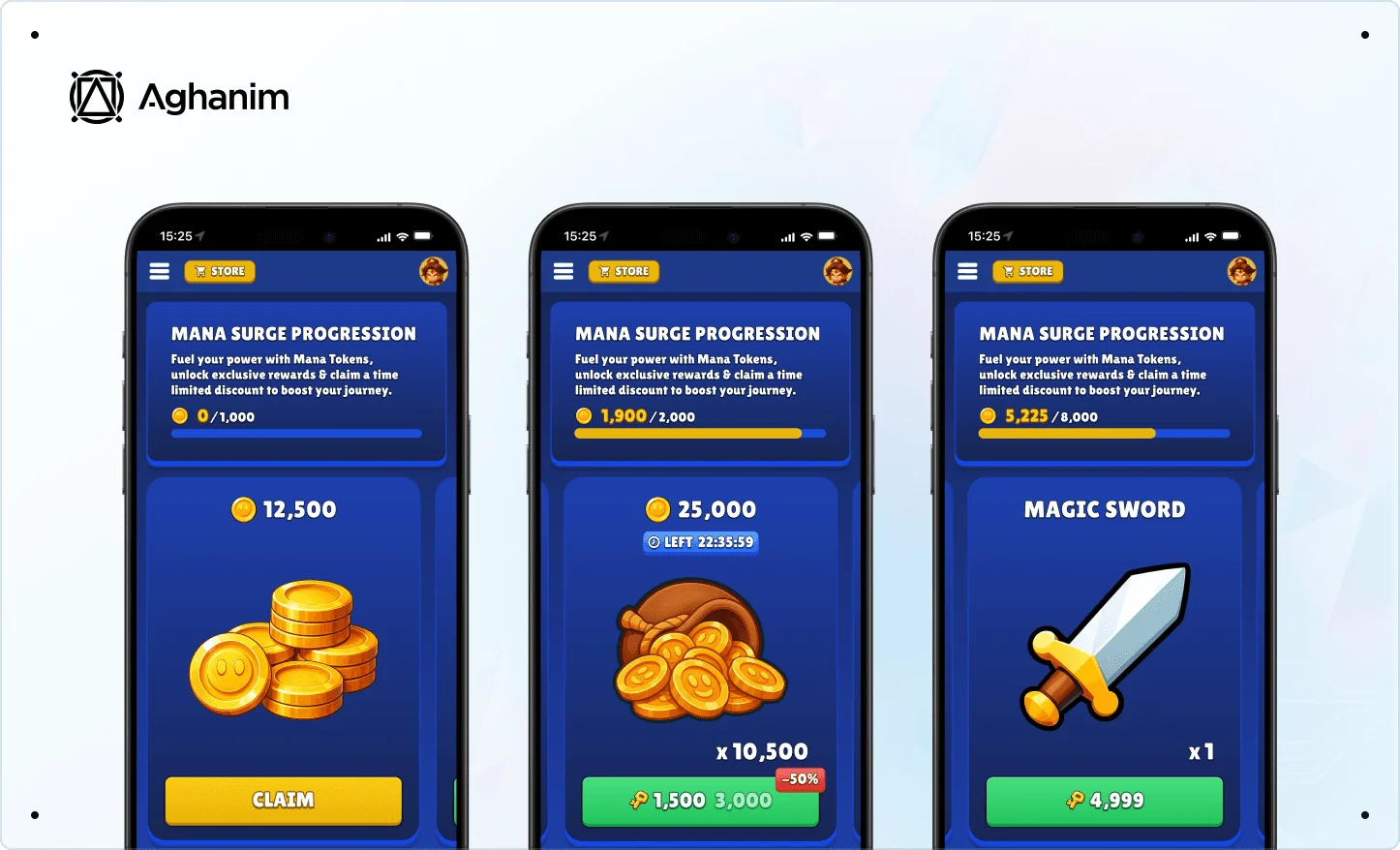
A webshop has a focused job: present products and offers, then take the player through purchase. Its catalog, merchandising, and checkout experience all support that job.
For a studio establishing a web purchase path, that focus can be the right scope. The main operating questions stay close to commerce. Which products are available? How are offers presented? What does the player see before checkout? How does the purchase flow fit the game’s branding and economy?
Buying intent organizes the experience. The player arrives to browse or purchase, and the webshop supports that journey from offer discovery through checkout.
The label describes the center of the model, not every technical or product decision behind it. A webshop may carry additional features, but products, offers, and purchases remain its primary purpose.
That clarity has operational value. The studio can concentrate its web calendar, merchandising work, and measurement on transactions without committing the channel to a larger content or engagement role.
Game hub puts commerce inside a player destination
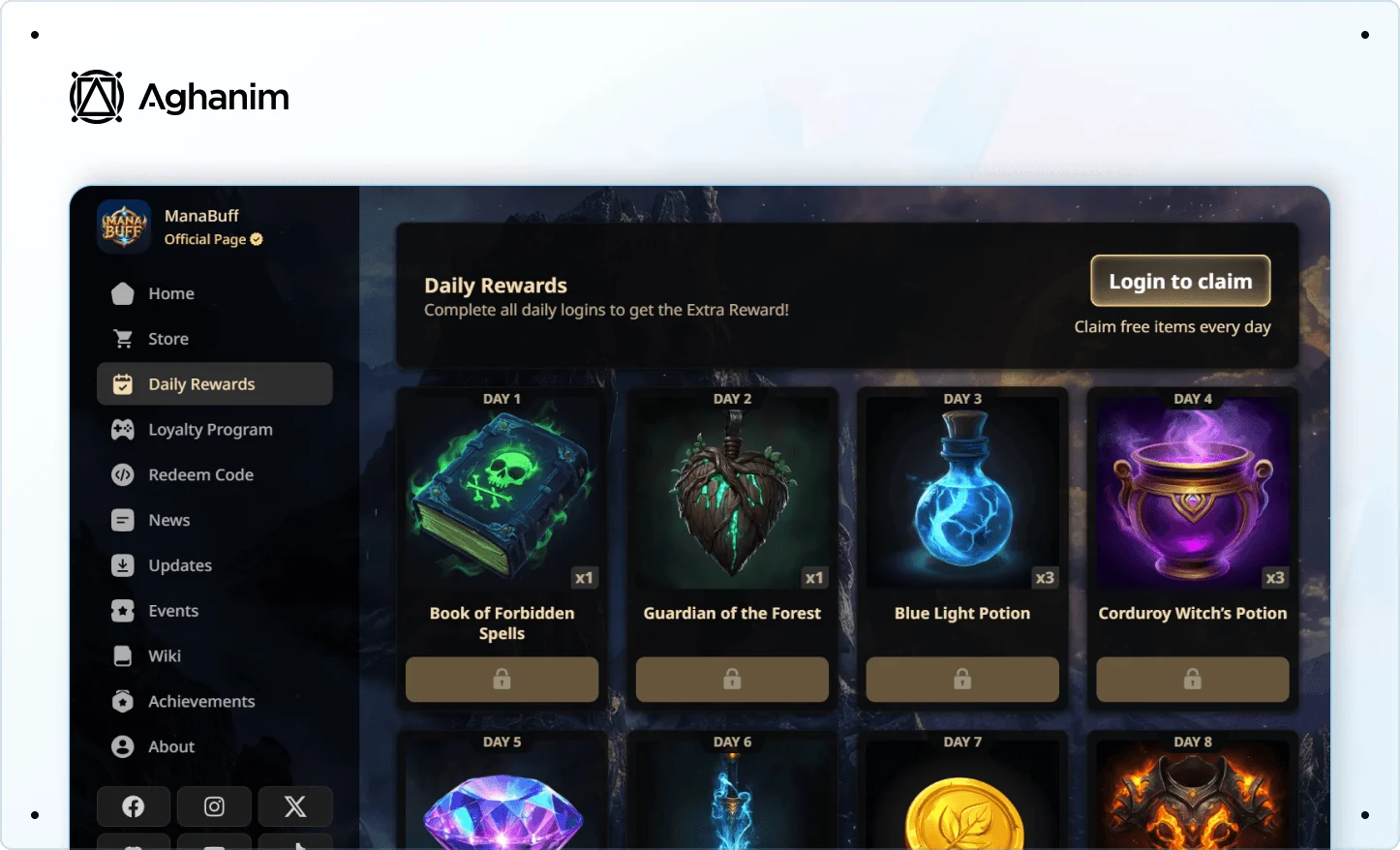
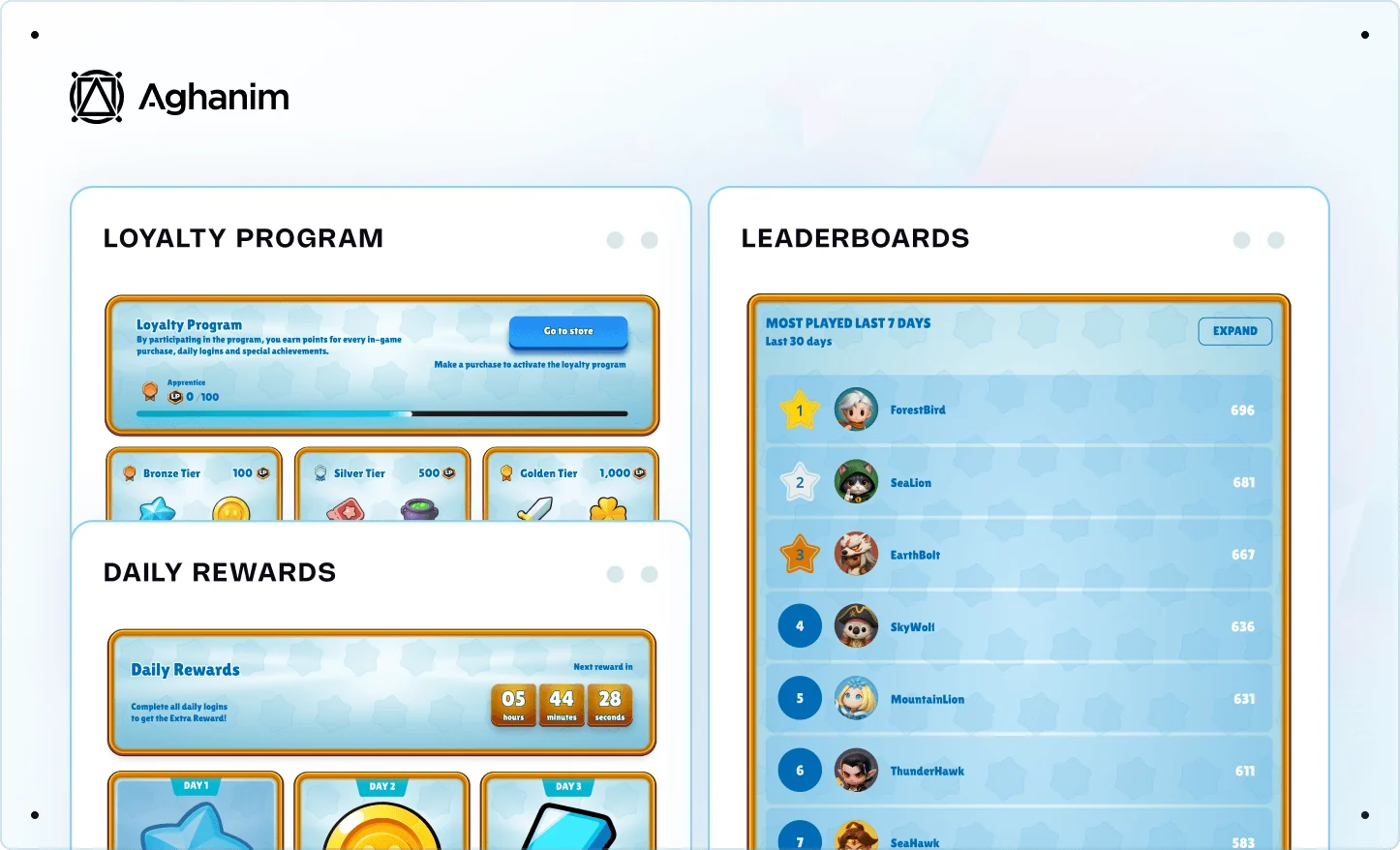
A game hub brings commerce into a broader player destination, with the storefront operating as one part of the overall experience. It brings storefront, news, events, leaderboards, achievements, rewards, and player profiles into one branded place on the studio’s own domain.
That broader scope gives each visit more than one possible purpose. A player might arrive for an offer, then find an event or reward. Another visit might begin with a leaderboard, profile, achievement, or piece of game content. Commerce stays visible while other activity gives players reasons to return between purchases.
Storefront and player activity share the same branded destination. The studio operates both as parts of the experience around the game.
For a studio head or publishing lead, this is the strategic difference. A web purchase path determines how a transaction happens. A game hub also determines what relationship the studio operates on the web before and after that transaction.
The commerce capabilities overlap
Studios searching for webshop solutions may encounter game hubs while evaluating DTC options, but the two concepts represent different operating models. A webshop is centered on transactions, while a game hub extends the game onto the web and integrates commerce into a broader player experience.
That overlap affects evaluation. A shortlist built around webshop commerce can include both transaction-centered products and broader player destinations. The studio must compare the operating model behind each result, not rely on the search category to make that distinction.
The practical test is whether the planned channel has completed its central job after checkout. If it has, the studio is evaluating a focused webshop. If the channel continues to support an ongoing player relationship, the evaluation has moved into game hub territory.
The operating plan determines the model
The clearest distinction appears in the team’s operating plan.
A webshop plan concentrates ownership around catalog, merchandising, purchase flow, and commerce measurement. A game hub plan also needs people and processes for programming the destination: deciding what changes, what brings players back, and how that activity connects to the game.
That broader scope is the trade-off. More reasons to visit require a current operating calendar and clear ownership after launch. Without them, the additional parts of the hub become static sections around a storefront.
The decision is therefore organizational as well as technical. A studio choosing a webshop is defining a focused commerce channel. A studio choosing a game hub is committing to operate commerce as one part of the game’s ongoing presence on the web.