What Players Can Do Inside a Game Hub
A live title can keep sessions after the install report has already turned down. Product and monetization teams already watch that split: players who are in the game still need somewhere to go between content drops, while new-user volume is harder to expand.
Tower's State of Gaming 2026 , published February 26, 2026 and covering the App Store and Google Play, measured the same split at market scale. Time spent in mobile games rose 0.9% while downloads fell 7.2% to 50.4 billion. The figures describe mobile-game activity on those stores. They name the condition a game hub has to meet: hold the activity existing players already look for, so the storefront has a place to sit.
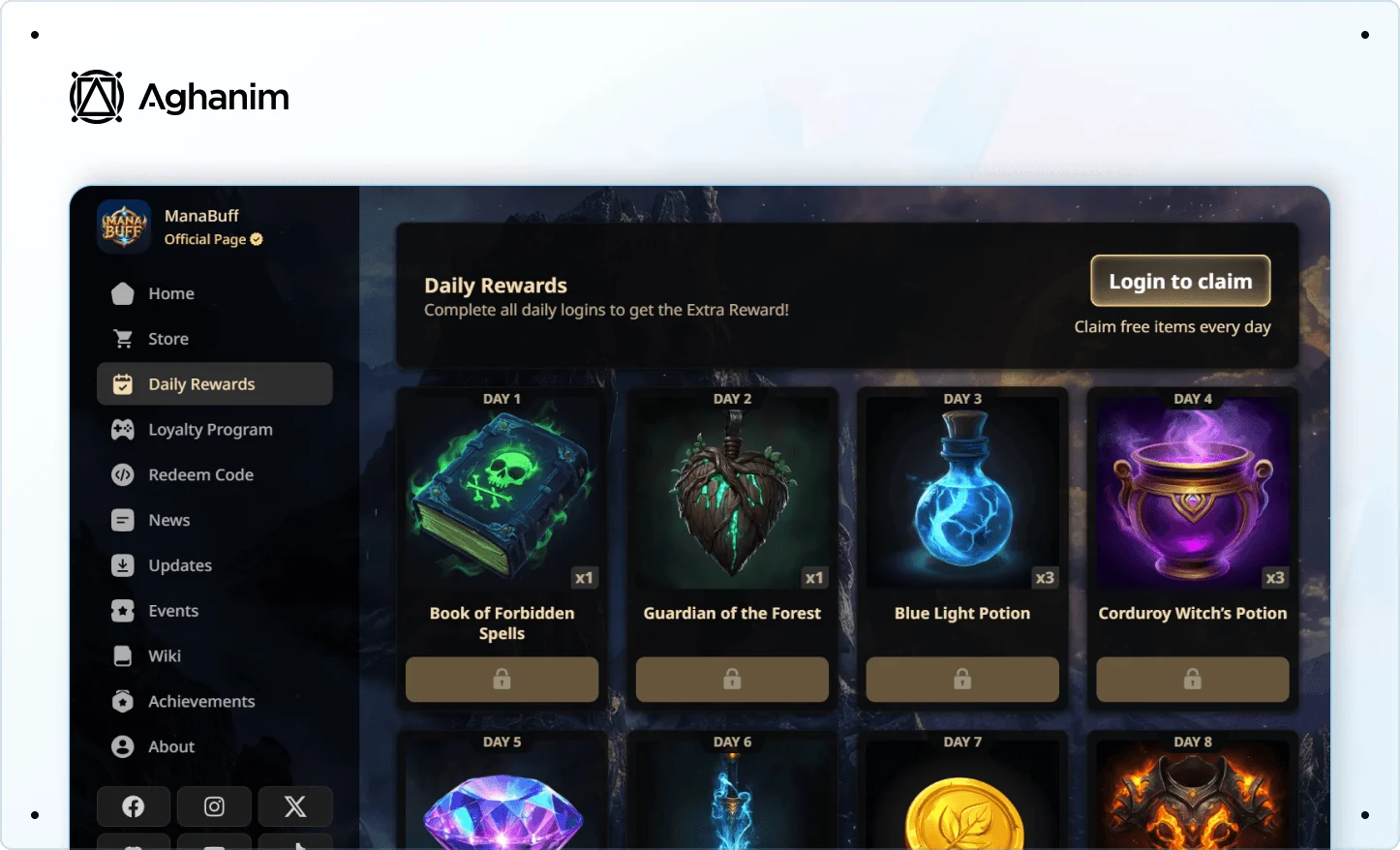
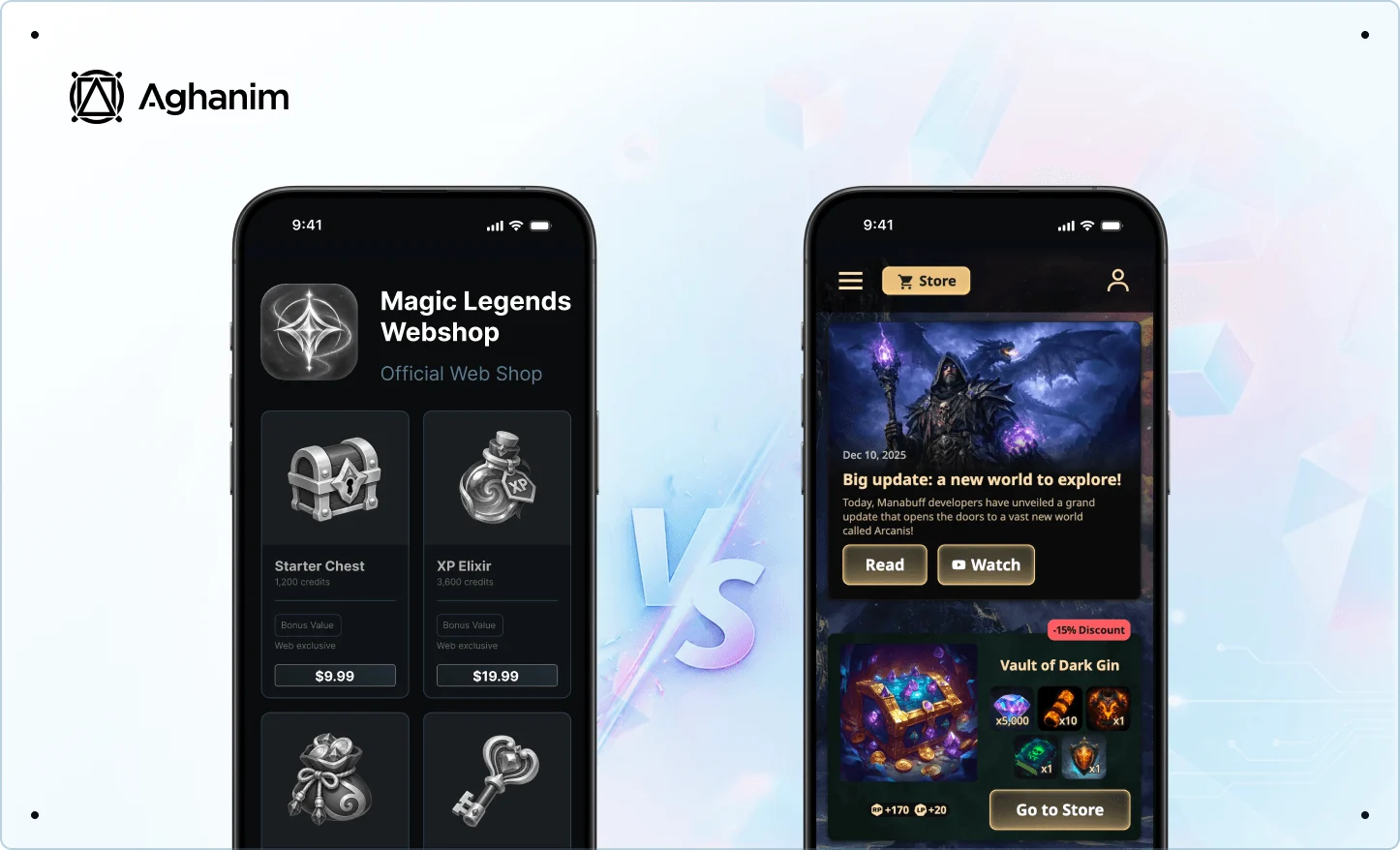
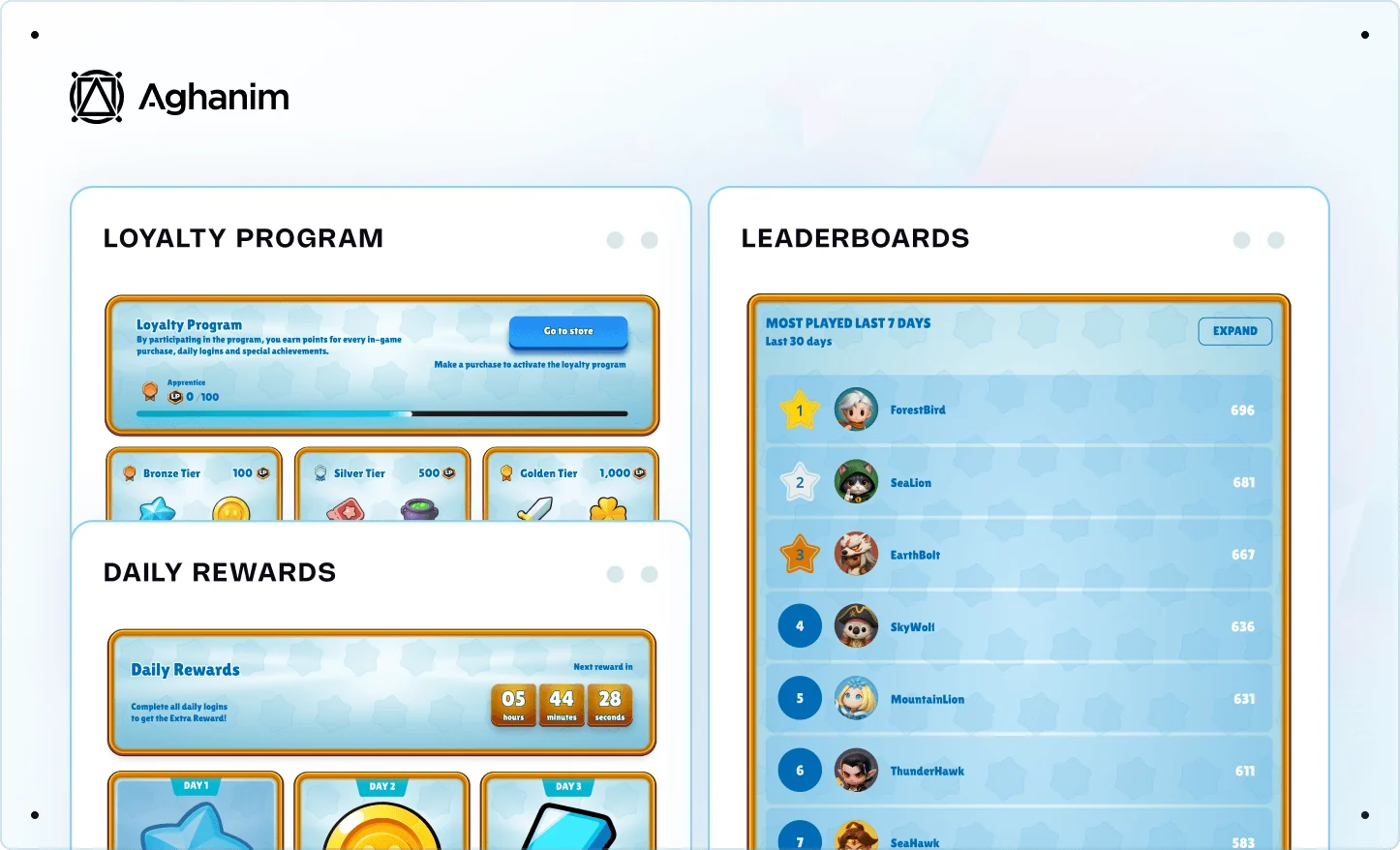
A studio game hub powered by Aghanim puts that activity on the studio's own domain. Players can read news, join events, claim rewards, check leaderboards, review achievements, open a profile, and reach the storefront in one branded hub. The operating question is which of those actions the team will actually run this week, and how a purchase sits among them.
Existing playtime is the audience the hub serves
When time spent holds and downloads fall, the useful web visit serves a player who already has the game. That player arrives with a reason the title already created: an update, an event window, a claim, a standing to check, or an offer seen in-game.
The hub gathers those reasons onto one place the studio owns. Each one is something a player can do on a day nobody is buying. The purchase stays on the same visit.
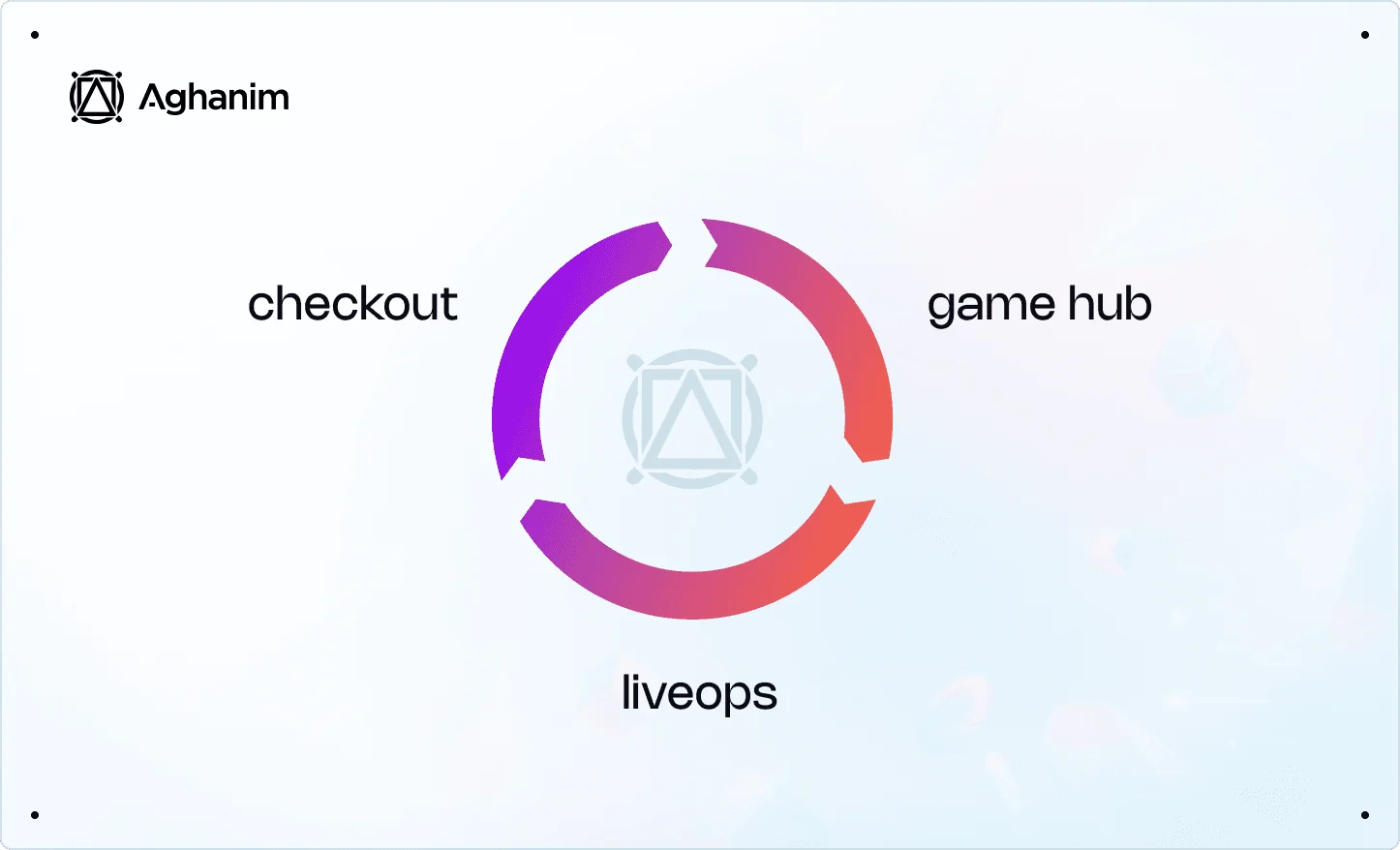
This is an operating choice about which of the game's loops run on the web. Community owns the update, liveops the event and the claim, monetization the offer. The hub is where those jobs share a player-facing page, so the visit can start from any of them.
A hub that only counts checkout will under-read that visit. Sensor Tower's time-spent figure is about hours already being spent in mobile games on those stores. The web channel has to serve the players behind those hours, then let commerce participate.
News, events, and claims give a visit its own job
Players open the hub to read an update, join an event, or claim a daily reward, a coupon, or virtual currency. Progression and one-time or recurring claims can sit in the same journey the studio defines. Limited availability and player events add a window around those claims.
The sequence is what makes the visit worth repeating. An update can point to an event. The event can make a claim relevant. The claim can leave a visible next step. The storefront can appear next to the activity that brought the player there.
Daily rewards, coupons, and virtual currency do different jobs inside that sequence. A recurring claim gives the next day a reason. A coupon can support a specific promotion. Virtual currency can move the player through the studio's own economy. The studio decides the mix; the hub is where the player completes the action.
The first trip out of the game still costs a step. It works when it starts where intent already exists: shop entry, an offer, a reward claim. Later visits can start from news or a claim, because the player already knows what the hub is for.
Progress stays readable between sessions
Leaderboards, achievements, and player profiles give a visit a status check. Standing, unlocks, and the state of a journey can be read without waiting for the next client session to explain them.
That visibility keeps the hub current between purchases. A leaderboard gives a reason to check position. An achievement gives something to return to. A profile keeps identity continuous across news, rewards, and the storefront, so the next claim or offer can meet a player the hub already recognizes.
The useful decision is which of those systems create return behavior on the web. Some titles need the leaderboard visible between sessions. Others need the profile and the reward balance, and can leave competitive standing in the client. The hub can carry the systems the team selects, on the same branded place as the catalog.
Commerce happens on a visit already in motion
Someone who opened the hub for a reward can still buy. Checking a leaderboard can still put an offer in view. Localized pages, profiles, news, and platform-aware game links keep that visit aligned with the market and the client the player came from, so the action they came to complete still feels like the game.
A code redeemed on the hub can carry attribution back to the creator who shared it. The player completes the redemption on the same page as the rest of the activity; the studio gets the attribution and payout through the same platform.
Players can install or reopen the hub, with the experience operated by the studio. That gives a returning player a path that does not depend on finding the original link again.
Playtime is holding with players the studio already has. The hub's job is to give those players something to do, and to keep the storefront inside that activity.