How Game Hub, Checkout, and Liveops Work Together
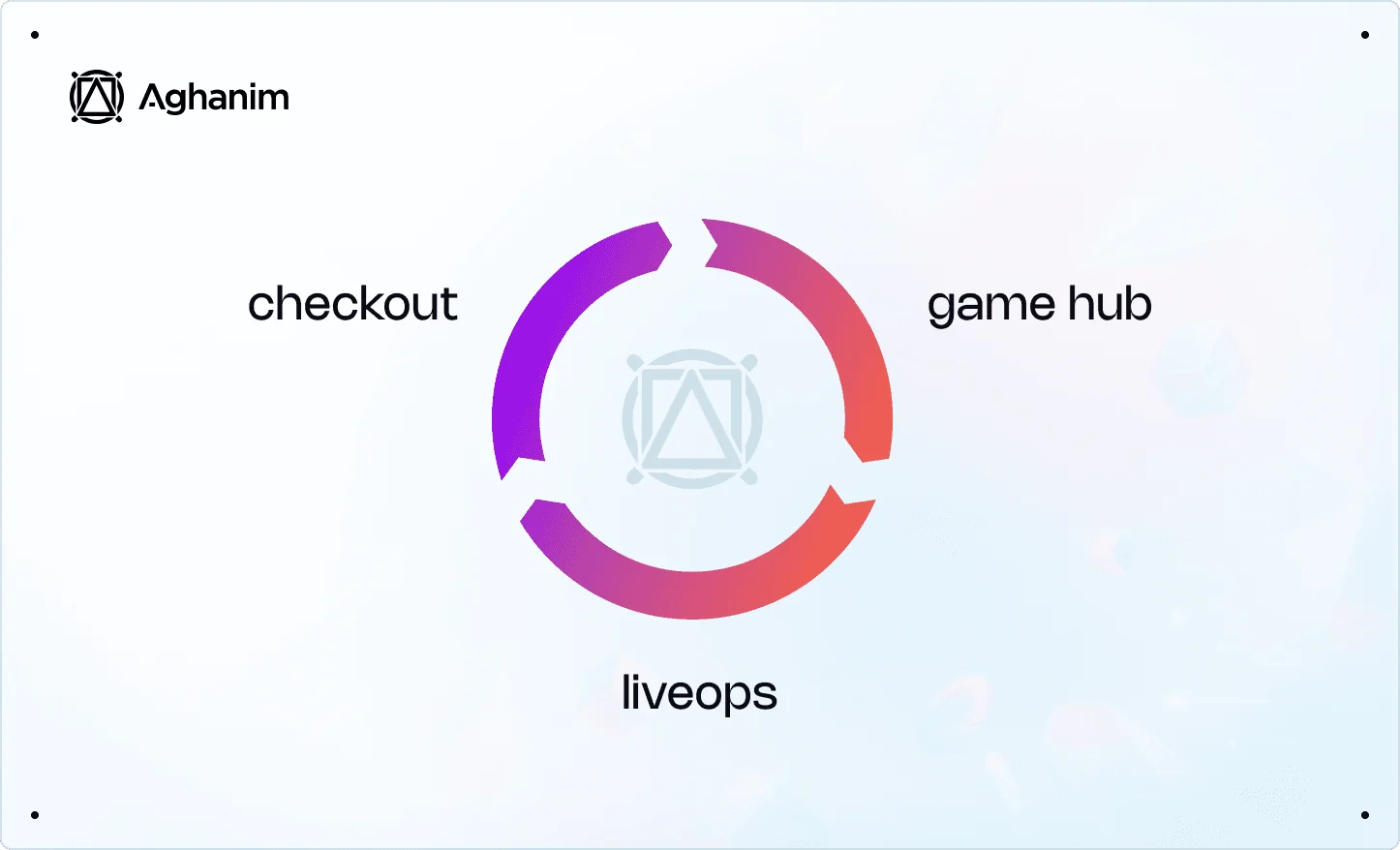
A studio can have a web offer, a campaign calendar, and a payment flow and still be running three disconnected jobs. The player feels that as a handoff. The operator feels it as three calendars, three owners, and a sale that sits outside the activity that created it.
Tower's State of Gaming 2026 , published February 26, 2026, read the current mobile market as a shift from scale to efficiency. CEO Oliver Yeh named webstores and liveops among what is driving the growth that remains. That is an argument for one operating loop: a player-facing hub, campaigns that fire from real player signals, and a checkout that finishes the sale on the same branded page.
A game hub brings Aghanim’s commerce and liveops capabilities into one player-facing experience.
Efficiency work happens on the audience a studio already has
When remaining growth depends on operating the players a title already has, the web channel has to hold the activity those players return for, time the next offer or event to a real moment, and complete the sale on the same branded page.
That is one loop. Game hub holds the visit. Liveops decides what appears in it. Checkout completes the transaction with the game's branding and its upsells.
Each product owns a different step. Splitting them into separate sites, calendars, or payment pages puts the handoff back in front of the player. The efficiency Sensor Tower is naming then becomes three teams coordinating after the fact.
The practical test is a single player path. A gameplay signal places the player in a segment. A campaign puts an offer or event on the hub. The player opens that page for the activity already there, sees the offer, and completes the sale without leaving the studio's branded hub. If any step in that path is a different site or a different calendar, the loop has already broken.
Game hub holds the player-facing loop
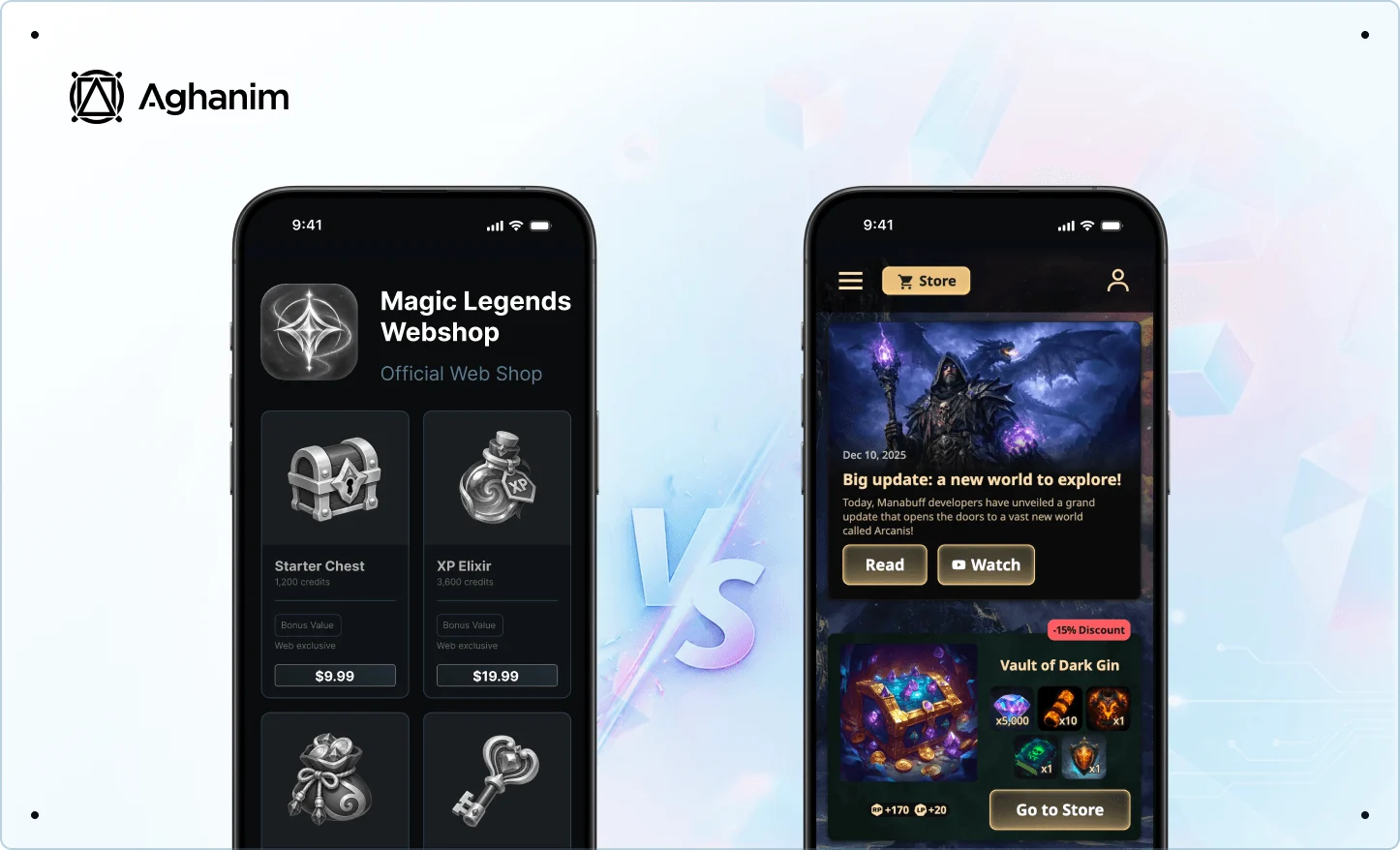
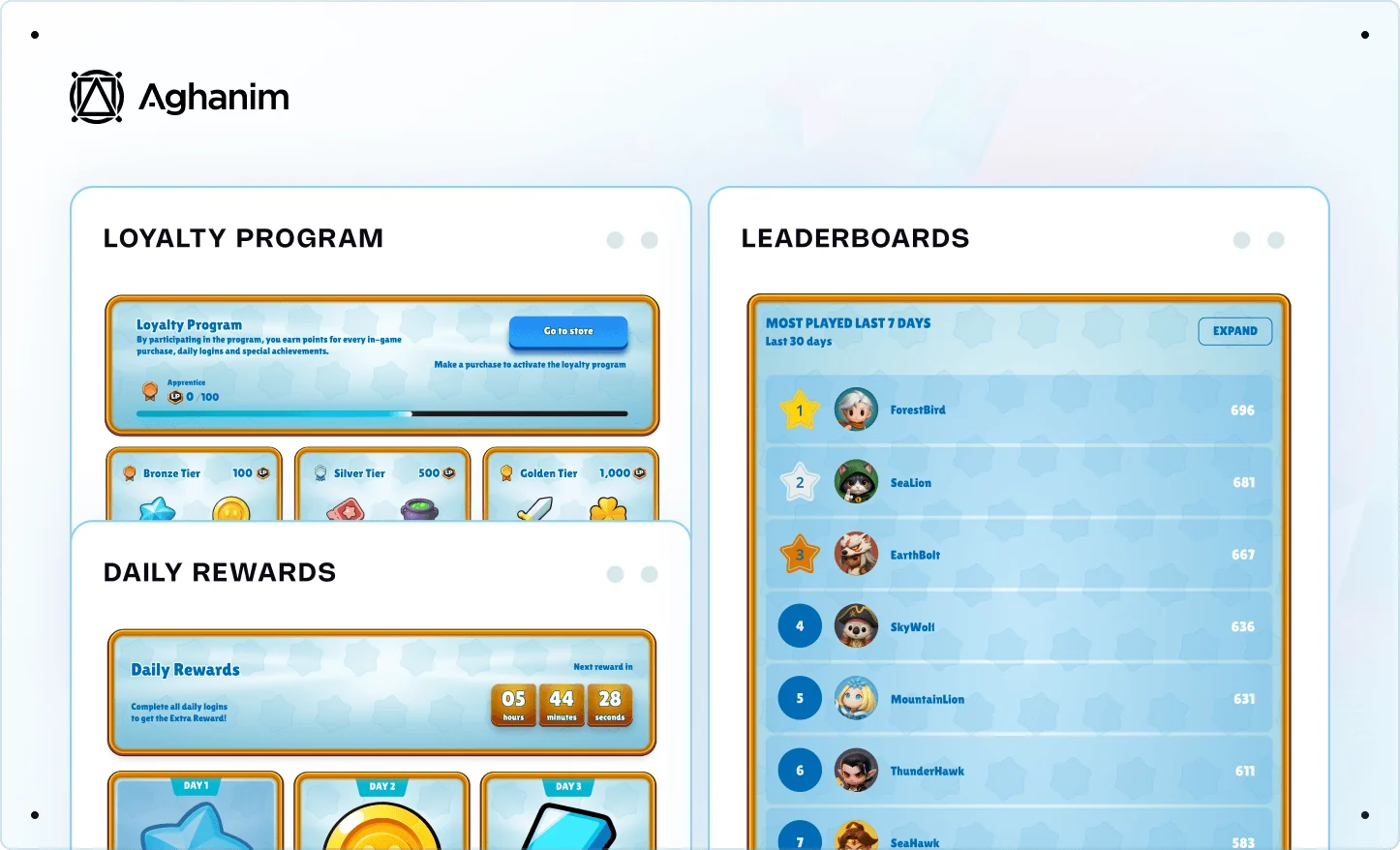
Game hub is the studio's own place on the web: storefront, news, events, leaderboards, achievements, rewards, and player profiles in one branded hub on the studio's domain.
Players come back for those reasons. The storefront sits in the middle of that activity, so a sale can happen on a page the player already had a reason to open. Checkout and liveops both need that page. A campaign needs somewhere current to land. A payment flow needs the rest of the visit around it.
Studios configure, preview, publish, report on, and maintain the hub, commerce, and campaign experiences from the studio dashboard and builders. The loop is operable from one place, which is what keeps the three products on the same calendar.
The first trip from the game still costs a step. Link-out flows are built to each platform's current policy and kept current as it changes, so the path can start from a shop entry, an offer, or a reward claim. Later visits can start from the hub itself, because the player already uses it for activity between purchases.
Liveops times the next action to a player signal
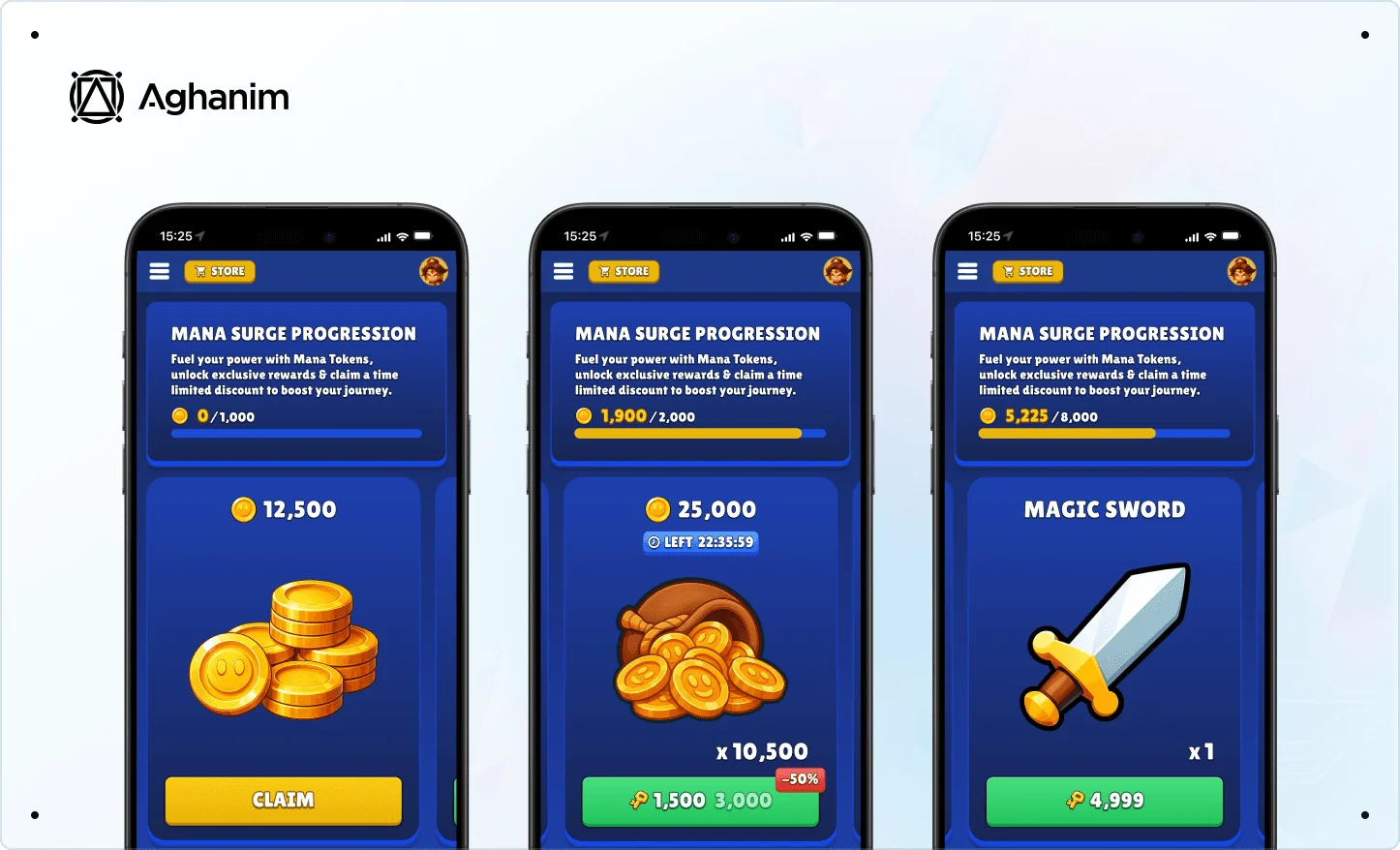
Programmatic liveops runs web campaigns from a drag-and-drop builder. Contextual assortment and segmentation can fire from real-time gameplay signals, so an offer or an event can match a segment without a new build for each campaign.
Targeted offers, limited availability, daily rewards, coupons, progression, and player events can be combined into timed journeys for the studio's own economy. Points, progression, cashback, tiers, and reset behavior are configured per program. The studio sets the lifecycle that fits its economy.
The campaign then appears on the hub, next to the news, rewards, and storefront the player already uses. The signal, the segment, and the player-facing page share one journey. Checkout is the step that closes a paid moment inside that journey, on the same page.
The deeper integration is engineering work. Real-time gameplay signals have to reach the campaign layer. That is the trade-off worth scheduling: the builder can run the campaign, and engineering connects the signal that makes the timing true.
Checkout finishes the sale on the same branded page
Checkout carries more configuration than the payment flow built into the App Store or Google Play, in a single product. It runs on Aghanim's merchant-of-record coverage across 200+ countries and territories and all 50 US states, with compliance, tax, and fraud handling built in. The path is built for as few steps as possible between an offer and a completed sale.
The flow, the payment methods offered, and the steps a player takes are tuned per market on an ongoing basis. Conversion work does not stop at launch. Checkout carries the game's branding and its upsells on the same hub as the rest of the visit. Fraud is caught through real-time monitoring and adaptive authentication, so the check gets harder where the risk does.
Player payment support is available 24/7 across live chat, email, iMessage, and Facebook Messenger. When a sale happens on the hub, the player has a place to take a payment question without leaving the same commerce operation.
Direct checkout is available only where the studio's setup calls for it. It is a purchase path. The sale still belongs on the hub the campaign and the content already occupy.
Together the three products give the studio one loop: activity on the hub, a campaign timed to a player signal, and a completed sale on the same branded page.