What Is an Aghanim-Powered Game Hub?
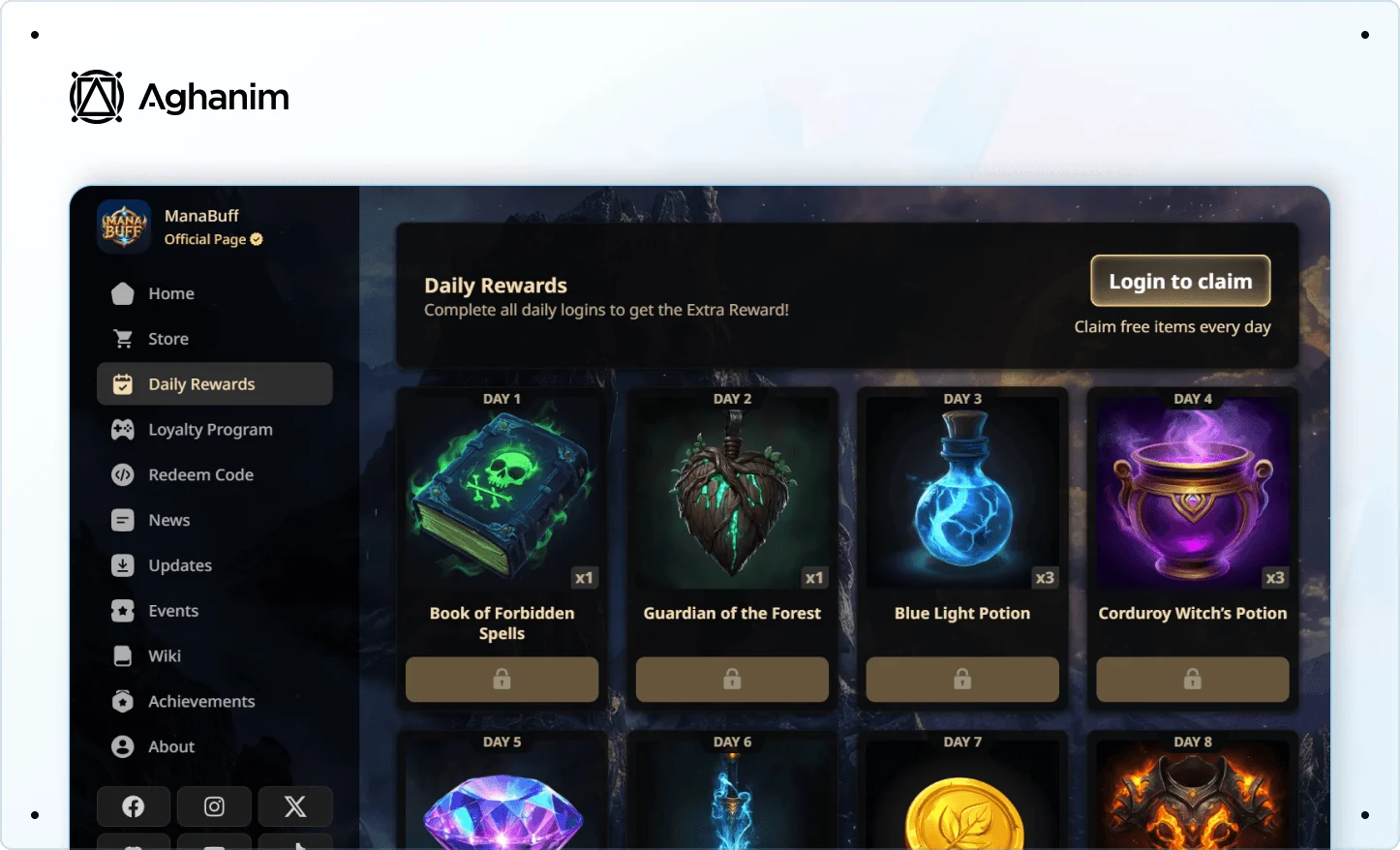
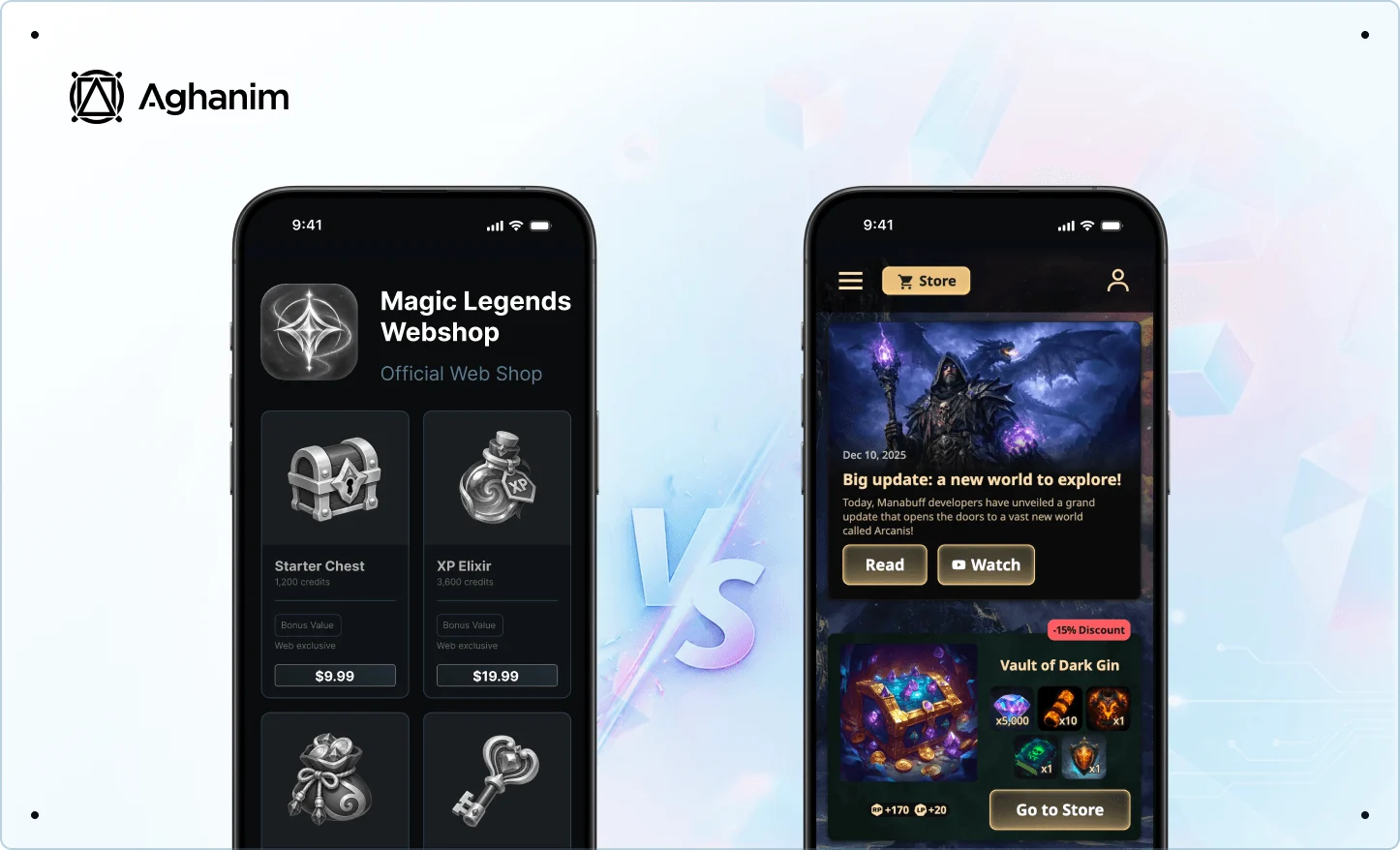
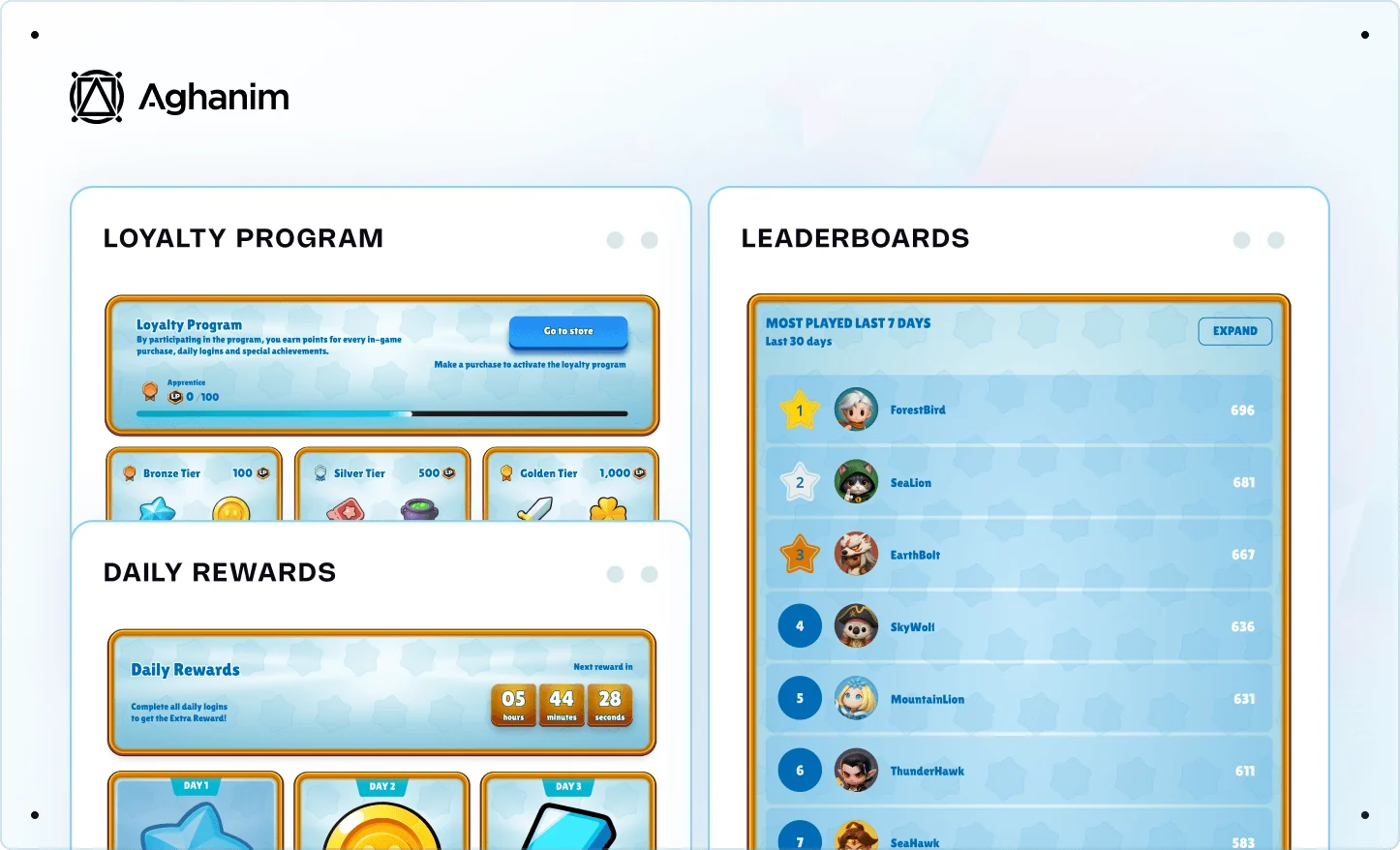
A studio game hub powered by Aghanim is a branded website on a mobile game studio’s own domain. It brings the game’s storefront, news, events, leaderboards, achievements, rewards, and player profiles into one place.
The hub extends the game onto the web, where player activity and commerce operate together. Players have reasons to visit between purchases, while the studio gets a DTC channel it can launch, manage, customize, and extend as part of the game.
The game hub connects player activity and commerce
A checkout page handles a specific moment: a player arrives ready to buy, completes the transaction, and leaves. The game hub supports a longer operating loop.
A player might open the hub to read an update, join an event, claim a reward, check a leaderboard, review an achievement, or visit the storefront. Each activity gives the player another reason to return. Commerce sits inside that recurring activity.
This changes what the studio operates. DTC becomes more than routing a payment. The storefront joins the content calendar, reward journeys, events, and other player-facing work already shaping the game.
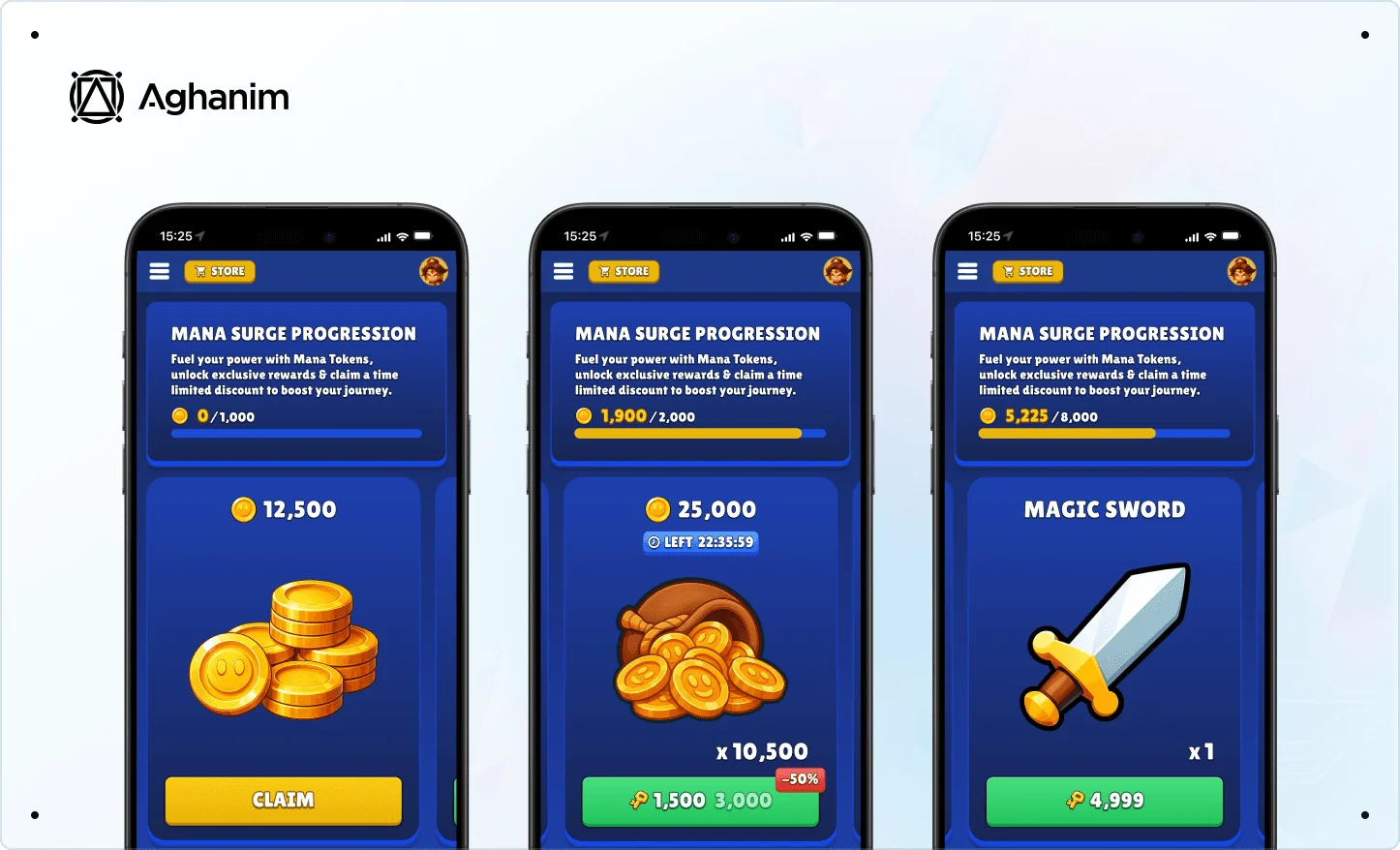
A studio can publish news that brings players back, run an event, make a reward available, or give players a place to check their progress. A related offer can appear in the same hub. Commerce becomes part of the broader player experience, happening in a place the player already knows and uses.
A webshop can process demand that already exists. The game hub also gives the studio a place to run the activity around that demand. That is the difference between opening a web transaction route and operating a web channel as part of the game.
The storefront sits inside the player loop
A storefront needs traffic. News, events, rewards, achievements, and leaderboards create recurring reasons to visit around it.
That connection lets product and monetization teams coordinate commerce with the rest of the player experience. A promotion can appear alongside the event it supports. A reward can bring a player back before the next purchase. A leaderboard or achievement can keep the hub relevant when no transaction is taking place.
The first trip from the game to the web still costs a step. The path works best when it starts where player intent already exists, such as a shop entry, offer, or reward claim. Later visits can serve a wider purpose. Once players know the hub as the place for news, events, rewards, and progress, returning no longer depends on arriving with purchase intent.
This is the operating loop behind the product: activity brings the player to the hub, the storefront participates in that activity, and the studio plans both on the same channel.
Studios operate the hub on their own domain
The game hub runs on the studio’s domain with the game’s branding. The studio decides how content, storefront presentation, rewards, and player activity appear together.
That control lets the hub follow the title’s operating rhythm. News can follow the content calendar. Events and rewards can support the liveops plan. Storefront presentation can change with the game’s promotions and player-facing activity.
Operation continues after launch. Studios configure, preview, publish, report on, and maintain game hub, commerce, and campaign experiences through the studio dashboard and builders. Merchandising, themes, content, promotions, roles, and reporting can be managed directly where the selected product configuration supports them.
The control comes with a real operating responsibility. A hub carrying news, events, rewards, and commerce needs a cadence. The studio decides what changes, what brings players back, and how the storefront fits the title’s calendar.
That is the studio’s operating position: one domain, one branded hub, and one place to manage player activity and commerce together.
The builder provides the launch point
A studio does not begin with a blank page. The GenAI-powered Game Hub Builder puts a working hub on the studio’s domain in under 1 minute, with battle-tested templates and customization available from there.
The template supplies the initial structure. The studio can then adapt the presentation to the game’s branding and decide which content, commerce, and player features belong in the experience.
This builder-led approach changes the build queue. The studio can begin operating a working hub without first engineering the entire website. Product and monetization teams can use the available builder and dashboard controls, while engineering effort goes to the deeper integrations and custom behavior the title requires.
The game hub remains open to studio engineering
The builder is the starting point, not the limit. A studio’s own engineers can extend the hub directly and on their own timeline.
That division gives each team a defined role. Product and monetization teams operate the available content, merchandising, promotion, and reporting controls. Engineers add depth where the title needs custom development or integration.
Deeper integrations remain engineering work. They build on a functioning hub, so the team can reserve that work for extensions that serve the game instead of rebuilding the entire web experience before launch.
As the title’s content, liveops calendar, and commerce program develop, the hub can develop with them. The studio can launch from a working template, operate the player-facing experience, customize its presentation, and add engineering depth over time.
Game hub powered by Aghanim is the studio’s own place on the web for storefront, content, events, rewards, and player activity. Its defining position is operational: the studio can launch it through the builder, run it on its own domain, and extend it as part of the game.